Drones in Nebraska: Rules, Safety, and Secure Purchasing
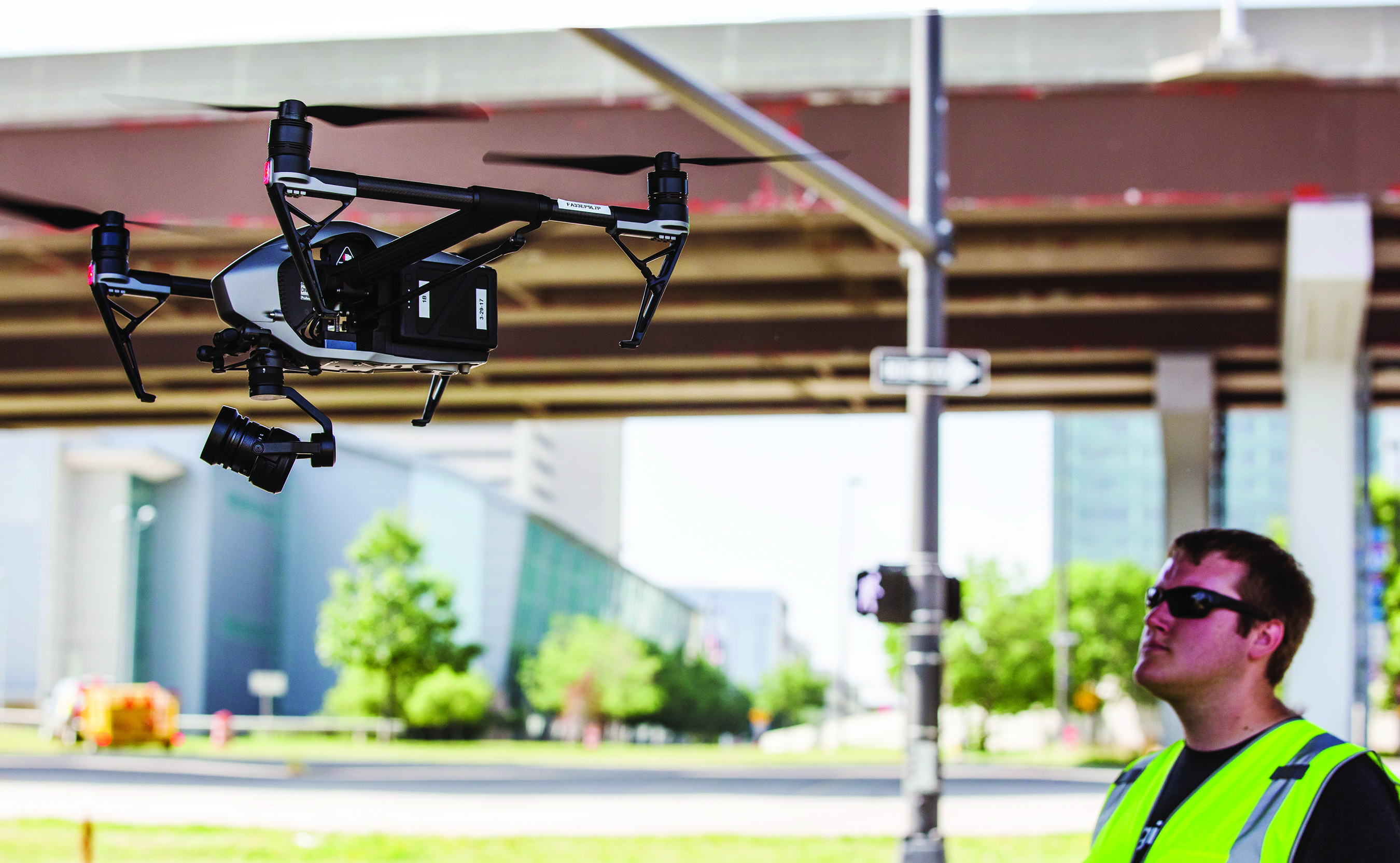
An unmanned aircraft system (UAS)—commonly referred to as a drone—includes the unmanned aircraft itself and all supporting equipment needed to operate it, such as a control station, data links, telemetry, communications, navigation equipment, and other associated components. UAS and drones are powered, aerodynamic vehicles that do not carry a human operator and are operated without direct intervention from within or on the aircraft. They may fly autonomously or be piloted remotely and can be designed to be expendable or recoverable.
All unmanned aircraft in Nebraska are considered aircraft under federal law and must comply with FAA regulations governing safety, airspace management, pilot certification, and operational rules.
How UAS Operations Are Regulated in Nebraska
In 2025, the Nebraska Legislature established the Secure Drone Purchasing Act (Neb. Rev. Stat. § 73‑1001 to 73‑1005). Under this law, the Nebraska Department of Transportation Aeronautics Division must create and maintain the List of Secure Drones Authorized for Purchase that meet state and federal cybersecurity standards. As of Jan. 1, 2027, Nebraska state agencies may only acquire drones included on this list. Political subdivisions (e.g., counties, cities) should also acquire these drones, to the extent practicable. This policy does not regulate private recreational drone use, FAA flight authorization, or non-government purchases.
Nebraska List of Secure Drones Authorized for Purchase
This list identifies unmanned aircraft systems (UAS) platforms that meet compliance requirements under the Nebraska Secure Drone Purchase Act. Inclusion on this list does not constitute endorsement. Vendors, state agencies, or other interested parties who would like a drone considered for addition should contact NDOT’s Aeronautics Division at 402‑471‑2371.
Other Nebraska-specific UAS Laws
-
Foreign Adversary Contracting Prohibition Act: Prevents government contracts or purchases from companies controlled by foreign adversaries. Applies to drone procurement with public funds.
-
Criminal Trespass (Neb. Rev. Stat. 28‑521): Nebraska law criminalizes causing an unmanned aircraft (drone) or other device to enter onto or above another person’s property with the intent to observe someone without their consent in a place of solitude or seclusion. Violations are treated as a misdemeanor offense.
-
Game & Parks Restrictions: The Nebraska Game & Parks Commission restricts drone use in state parks, recreation areas, and historical parks, requiring permits for special uses.
-
Wildlife Protection (Neb. Rev. Stat. § 37‑509): Nebraska law prohibits using any aircraft, including drones, to shoot, harass, or otherwise disturb wildlife. Exceptions exist only for authorized permits, and violations are treated as a Class II misdemeanor.
-
Nebraska Pesticide Act: Nebraska law treats drone pesticide applications as aerial pesticide applications. Operators must hold the proper Nebraska pesticide applicator license category (e.g., Category 12 for aerial). FAA Part 107 certification and FAA registration are required, and larger drones may require additional FAA approvals such as COAs.
Additional Considerations
-
Local and Institutional Policies:
-
City/county parks and ordinances: Some municipalities or land managers may prohibit drones on public property or require permission — this varies by location.
-
University campuses: Certain institutions restrict drone use, especially around stadiums (e.g., on game days) and sensitive areas.
-
Nebraska State Capitol: The Office of the Capitol Commission has guidelines for UAV use around the State Capitol.
-
-
Emergency Response: Flying drones that interfere with emergency operations — such as blocking helicopters or endangering personnel — can trigger FAA enforcement and criminal penalties under federal law.
Before You Fly
-
-
CERTIFICATION
-
Recreational Flyers (Hobbyists): Must pass the TRUST (The Recreational UAS Safety Test) and carry proof.
-
Commercial Flyers (Work/Business): Must obtain a FAA Remote Pilot Certificate (Part 107) by passing the FAA’s Aeronautical Knowledge Test.
-
Government Drone Operators in Nebraska: May operate under FAA Part 107 or obtain a federal Certificate of Authorization (COA).
-
REGISTER YOUR DRONE (FAA DroneZone): All drones over 0.55 lbs (250 g) must be registered before first flight. Mark your drone with the FAA-issued number.
OBTAIN REMOTE IDENTIFICATION (Remote ID): Required for most drones operating in U.S. airspace as of April 21, 2024.
-
CHECK LOCATION (B4UFLY): Use FAA’s tool to check controlled airspace, restricted zones, airports, and temporary flight restrictions (TFRs).
-
REQUEST AUTHORIZATION
-
For Class B, C, D, or E airspace near airports.
-
Instant approval via LAANC if under pre-approved altitude limits (usually <400 feet).
-
Manual authorization via FAA DroneZone for other controlled airspace or waivers.
-
FLY SAFELY: Always check Notices to Airmen (NOTAMs) and weather. LAANC does not cover temporary restrictions or weather hazards.
Safe and responsible UAS operations are a shared responsibility.
UAS Resources
Safety & Operational Guidance
- Where can I fly? UAS Facility Maps
- FAA Drone Rules & Part 107
- UFAA Rules & Safety Tips
- Model Aircraft Operations
- Unmanned Aircraft Operations in the National Airspace System (NAS)
- Drone Safety & Best Practices
- Temporary Flight Restrictions (TFRs)
- Weather Considerations for UAS Operations
- Night Operations & Waivers
Public Safety & Emergency Operations
Privacy & Public Concerns
-
Secure Your Drone: Privacy & Data Protection Guidance (CISA)
- FAA Report a Drone Sighting / Unsafe Operation
- NASA UAS Safety Reporting (Confidential)
Training & Certification
How does NDOT use drones?
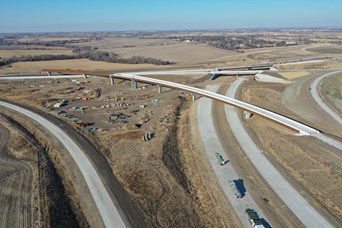
NDOT uses drones as a tool to improve safety, efficiency, and decision-making across the state’s transportation system. When used appropriately, UAS technology allows NDOT to collect data more safely, reduce disruptions to traffic, and minimize the need for staff to work in hazardous conditions.
- Infrastructure inspections: Inspecting bridges, culverts, and other structures without placing workers in traffic or at height.
- Project documentation and mapping: Capturing aerial imagery to support planning, construction progress, and asset management.
- Emergency response support: Assessing roadway conditions after floods, storms, or other incidents.
- Environmental and right-of-way monitoring: Supporting environmental reviews and land management activities.
NDOT’s use of drones follows all applicable federal aviation rules, Nebraska laws, and secure purchasing requirements to ensure operations are safe, responsible, and compliant.