Youth Aviation Art Contest
The 2026 U.S. and International Youth Aviation Art Contest wrapped up at the state level in January, with more than 80 Nebraska artists illustrating the theme, “Fly to Save Lives”. What an incredible showcase of creativity and skill!
Our first-place state winner in the Senior Division, Kiersten Hans, also placed first in the Senior Category in the national round. Her artwork advanced to the international judging round at the Fédération Aéronautique Internationale headquarters in Lausanne, Switzerland, where it competed against artwork from around the world. While Nebraska did not place in the international competition, this achievement represents an incredible accomplishment for Kiersten and for Nebraska’s Youth Aviation Art Contest program. For more on the U.S. winners, visit https://ndot.info/517244.
Check out the 2026 state winners here
Click here to view all 2026 submissions
If you share on social media, please tag us @NebraskaDOT on Facebook, X, and Instagram!
To celebrate the talented young artists who participated in this year’s contest, NDOT Aeronautics hosted two Aviation Art Showcase events featuring the winning artwork. The showcases brought the theme "Fly to Save Lives" to life.Students had the opportunity to hear firsthand how aviation saves lives, explore the many careers connected to the industry, and students, parents, and guests were able to view medical helicopters up close. For photos visit https://ndot.info/AviationArtShowcase26.
Thank you to the outstanding speakers and partners who helped make the events possible, including representatives from StarCare, LifeNet 1-2 Norfolk, Brian Wilcox of Wilcox Flying Service, the Nebraska Forest Service, the Nebraska Army National Guard, Wayne Airport, Lincoln Airport, and Duncan Aviations.
An art exhibit featuring the top three winners in all three categories will be displayed at locations across the state. View the schedule below.
The 2027 contest kicks off in October 2026, with a brand-new theme to inspire young artists. Sign up for our email list to get updates, resources, and early access to contest details! The Youth Aviation Art Contest isn’t just a one-time event — it’s a great way to integrate aviation, STEM, and creative thinking into your classroom all year long. Check out our classroom resources to the right for inspiration. A downloadable poster and brochure will be available in October once we receive the 2027 theme.
Previous Nebraska Winners
Nebraska is proud to have had three national winners and one international winner.
Exhibit Schedule
Wayne State College
April 20 – May 1, 2026
Lincoln Airport (LNK)
May 11 – May 25, 2026
Lied Scottsbluff Airport
June 1 – June 12, 2026
Additional stops below...details coming soon!
- Fremont
- Omaha
- North Platte
- Hastings
- Grand Island
- Wahoo
- McCook
- Valentine
- O'Neill
Contest Rules & Guidelines
The U.S. contest is part of an international program run by the FAI. All contest rules (with the exception of U.S. deadlines) are set by FAI. Find all rules and guidelines on the FAI website.
Eligibility
Group I (Junior): Born between Jan 1, 2016 – Dec 31, 2019
Group II (Intermediate): Born between Jan 1, 2012 – Dec 31, 2015
Group III (Senior): Born between Jan 1, 2008 – Dec 31, 2011
Format & Representation
- Artwork must be 11 x 17 inches (Ledger/Tabloid).
- No frames or borders.
- Must clearly represent the contest theme.
Permitted Mediums
- Acrylic, oil, or watercolor paint
- Indelible markers or felt-tip pens
- Ballpoint pens and ink
- Crayola or similar permanent mediums
Not permitted:
- Pencil, charcoal, or non-permanent mediums
- Computer-generated artwork
- Photocopied collage work
Markings
A certificate of authenticity must be attached to the back and include:
- Artist’s first name
- Birth year
- Parent/teacher contact info (including email)
Title
Optional, but must relate to the contest theme.
Reproduction Rights
Submitted artwork becomes the property of State Sponsors, NASAO, and FAI and may be used for promotional purposes. Artwork may be returned at the request of the State of Nebraska.
Mail Artwork To:
NDOT Division of Aeronautics
Mark Langrud, Educational Outreach Coordinator
1600 Nebraska Parkway
Lincoln, NE 68502
Aeronautics in the Classroom

Sponsored by NDOT’s Aeronautics Division since it began in 1986, the U.S. and International Youth Aviation Art contest introduces young artists to the world of aviation and sparks interest in STEM careers.
Explore Nebraska Aviation: Aviation has been part of Nebraska life for over a century. Nebraska is home to 78 public-use airports, each playing a vital role in the state’s economy and communities. These airports connect people, support local businesses, and provide critical services such as medical flights and emergency response. Many airports host community events, air shows, and STEM programs designed to inspire the next generation of pilots, engineers, and aerospace professionals, and Nebraska’s Aviation Hall of Fame celebrates those who have made a lasting impact on the state’s aviation history.
Aerodynamics & Flight (STEM): Explore how air moves around wings to create lift. Students can show airflow, lift, or propulsion in their drawings to make their aircraft realistic.
Engineering & Problem-Solving (STEM): Have students design an aircraft, drone, or balloon that could deliver medicine, blood, or emergency supplies — then illustrate their ideas.
Math & Measurement (STEM): Students can calculate distances, delivery times, or cargo capacity and include those numbers in their artwork or diagrams.
Art, Creativity & Storytelling: Encourage students to tell a story through their art — for example, a life-saving mission from takeoff to delivery — combining imagination with STEM concepts, or to depict dramatic rescues, imaginative aircraft, or futuristic flying machines.
Technology & Innovation: Introduce real-life aviation tools like drones, helicopters, or air ambulances to spark ideas for futuristic, life-saving inventions.
Careers in Aviation & Aerospace: Discuss careers such as pilots, engineers, air ambulance staff, and drone operators to connect the contest to real-world opportunities.
Resources to explore aviation and flight:
Youth Aviation Art Contest Prizes
AGE GROUPS: Junior (6–9), Intermediate (10–13), Senior (14–17)
STATE LEVEL
The top three entries in each age group are forwarded to Washington D.C. to be judged in the national competition. State winners receive cash prizes (1st = $200, 2nd = $150, and 3rd = $100) and trophies sponsored by the Nebraska Aviation Council and postcards featuring their artwork to share with family and friends.
NATIONAL LEVEL
The top three entries in each age group are selected from the national competition to represent the U.S. in the international round. Winners are announced in March by the National Association of State Aviation Officials (NASAO). National winners receive a VISA gift card and a framed reproduction of their artwork generously sponsored by the AMCG Foundation.
Gift Card Amounts:
Senior - (1st) $1,500, (2nd) $750, (3rd) $375
Intermediate - (1st) $1,000, (2nd) $500, (3rd) $250
Junior - (1st) $500, (2nd) $250, (3rd) $125
INTERNATIONAL LEVEL
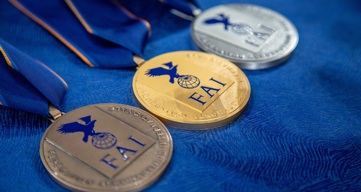
The FAI international contest, which typically includes 20–40 countries, announces winners in late May. International winners receive certificates and gold, silver, or bronze medals.